
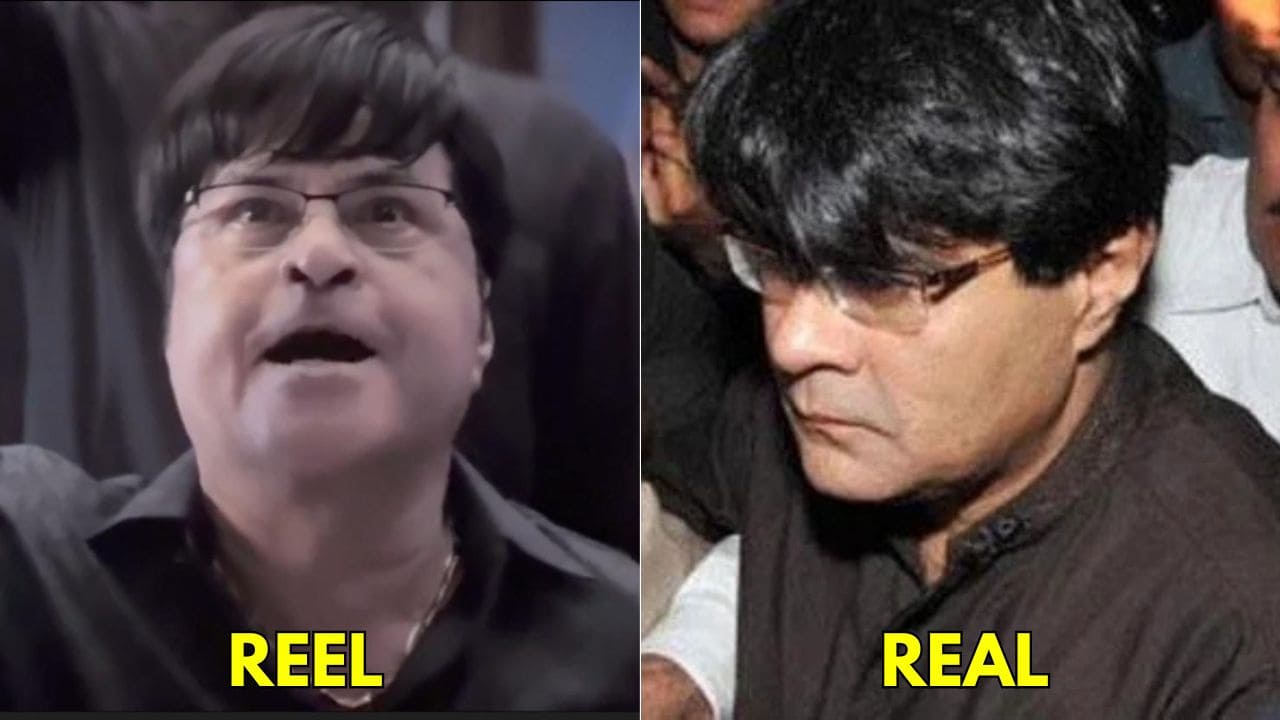
The story of the Khanani Brothers has resurfaced with Dhurandhar, a film that blends fact, speculation, and cinematic drama to revisit one of South Asia’s most elusive financial crime networks. While the movie simplifies a complex web into a tight thriller, the real history beneath it is far more layered. Long before the film, there existed a shadow economy of covert transactions, hawala routes, and offshore ledgers that quietly shaped regional geopolitics. Dhurandhar merely opens a window into that hidden world.
ISI shadow bankers -The real Khanani Brothers behind Dhurandhar
The release of Dhurandhar has renewed public interest in the Khanani Brothers, long alleged to be among Pakistan’s most influential shadow bankers. The film shifts attention away from conventional terrorism narratives and instead highlights the financial networks that sustain extremist operations.
ADVERTISEMENT
Rather than portraying men with guns, Dhurandhar focuses on men with money—operators who allegedly moved funds across borders, enabled terror financing, and stayed beyond the reach of law for years.
Inspired by real-life figures Javed Khanani and Altaf Khanani, portrayed by Ankit Sagar and Mushtaq Naika, the film draws from one of the largest cross-border money-laundering networks in South Asia. Through Khanani & Kalia International (KKI)—a firm later designated by the United States as a significant transnational criminal organization—the brothers were repeatedly accused of acting as ISI shadow bankers, allegedly facilitating hawala transactions, illicit fund transfers, and the circulation of fake Indian currency notes.

Who were the real Khanani Brothers?
In Dhurandhar, the Khanani Brothers are shown as financiers who never appear on the battlefield but fund those who do. The characters are based on Karachi-based operators Javed Khanani and Altaf Khanani, whose underground financial network spanned Pakistan, the Middle East, Europe, North America, and Australia.
Their influence was built through hawala channels, offshore accounts, and informal remittance routes that allowed money to move invisibly across borders. Investigators later alleged that KKI served as the corporate cover for these activities, publicly operating as a foreign exchange and remittance company while privately handling illicit transfers worth billions of dollars annually.
The film subtly hints at their alleged proximity to intelligence-backed operations, reinforcing their reputation as financial enablers of regional destabilisation rather than direct participants in violence.

Javed Khanani and Altaf Khanani – one network two outcomes
Javed Khanani remained largely in the shadows throughout his life. Linked closely to the internal financial operations of KKI, he avoided public exposure and never faced a formal conviction. His death in Karachi in late 2016, under circumstances that continue to invite speculation, occurred shortly after India’s demonetisation, which severely disrupted hawala networks and underground cash flows. With his death, all legal proceedings against him came to an end.
ADVERTISEMENT
Altaf Khanani, born in 1961, emerged as one of the world’s most notorious money launderers. According to investigators, his network serviced drug cartels, biker gangs, smugglers, and terror outfits across multiple continents. Arrested in 2016, he was extradited to the United States, where he pleaded guilty to a money-laundering conspiracy charge. He was sentenced to 68 months in prison and fined $250,000, and was released in 2020. His network was later officially classified as a transnational criminal organization.

Khanani & Kalia International and the Pakistan Forex scam
Khanani & Kalia International (KKI) was founded in 1983 by Hanif Kalia during Pakistan’s deregulated money-changing boom. The company expanded rapidly, offering currency exchange, remittance services, and corporate solutions. Its foundation was strengthened by the family’s commercial background—Abdul Sattar Khanani, the brothers’ father, had migrated from Gujarat and established early trading connections in Karachi’s business districts.
The company’s operations came under intense scrutiny during the Pakistan Forex Scam of 2008, when authorities alleged that billions of dollars were illegally routed offshore through private exchange firms.
ADVERTISEMENT
The State Bank of Pakistan revoked licenses, the FIA launched nationwide investigations, and KKI’s offices were raided, assets frozen, and operations dismantled. Although some executives were acquitted due to lack of evidence, the case exposed deep regulatory failures within Pakistan’s financial system.

How demonetisation in India impacted this underground money network
The 8 November 2016 demonetisation in India sent shockwaves far beyond its borders. Hawala routes stalled overnight, counterfeit Indian currency stockpiles lost value, and underground balance sheets collapsed. For networks like KKI, already weakened by legal pressure, the policy triggered a systemic breakdown they could not absorb.
Weeks later, Javed Khanani’s death only deepened speculation about mounting financial stress, unsustainable liabilities, and secrets buried in offshore ledgers.
All in all, Dhurandhar reminds us that while faces and names may change, the machinery of shadow finance continues to thrive beneath global conflicts. The Khanani Brothers were only one chapter in a much larger, evolving system where money quietly shapes violence.
ADVERTISEMENT
What are your thoughts on this hidden war? Do share via the comments below.

